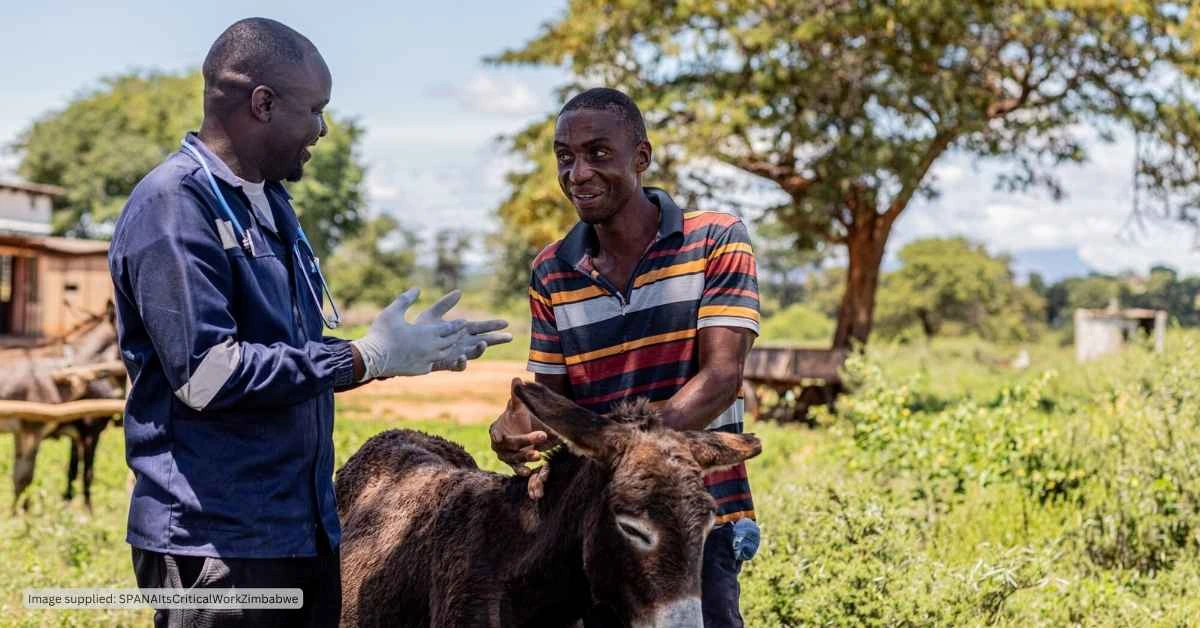

Working animals support millions of people around the world, yet their contribution is often overlooked.
Donkeys, horses, mules, camels, oxen, working dogs and other animals help people earn a living, transport goods, access water and reach essential services. In many communities, they are a part of their daily survival.
For Patience, a donkey owner from the Chivi district in southern Zimbabwe, working animals have provided a direct link to healthcare.
“When I was ready to give birth, I took the donkey cart and went all the way to the hospital. If someone is sick or injured, we can use the donkeys to get to the hospital,” she said.
There are an estimated 200 million working horses, donkeys and mules globally, but no comprehensive figure for working animals more broadly. That gap matters.
When working animals are not counted, their welfare needs are easier to miss. They may be left out of planning for veterinary services, transport infrastructure, disaster response and climate resilience. During droughts, floods and other emergencies, animals that support livelihoods can be among the last to receive help.
The issue is not limited to countries where donkeys, mules or camels are central to transport and trade. Working animals remain part of rural life in Australia, from horses used in mustering to working dogs supporting farms. Yet their role can still be underestimated. A poll commissioned by Working Animals International found that more than a third of Australians believe working animals are a thing of the past.
This creates a practical problem for charities, governments and community organisations. If working animals are not visible in data, they are less likely to be considered in policy.
Kerin Welford, Chair of Working Animals International Australia, said counting working animals is essential to understanding the communities that depend on them.
“Working animals are an essential part of so many communities. When they are not counted, their needs cannot be fully considered in critical areas such as veterinary services, infrastructure planning, climate resilience and disaster preparedness. The consequences are felt not only by the animals, but also by the people whose lives and incomes depend on them,” she said.
Including working animals in national censuses is one way to change that. Better data can help governments and service providers understand where animals are relied on, what support is needed, and how welfare risks can be addressed before they become crises.
Public support for this approach is strong. Working Animals International’s polling found that 68 per cent of Australians believe it is important to have a record of how many working animals exist worldwide.
There are signs of progress. Through advocacy by Working Animals International, working animals were included in Mauritania’s national census for the first time.
“The inclusion of working animals in Mauritania’s national census is an important step forward. When working animals are counted, they are more likely to be recognised in decisions that affect them,” said Bebaha Hmeiditt, Country Director for Working Animals International’s program in Mauritania.
The case for counting working animals is simple. Their welfare is tied to the well-being of the people who rely on them. A healthy donkey may help a family reach a clinic. A working dog may support a farm’s productivity. A horse may help manage livestock across difficult terrain. When these animals are neglected, communities can lose income, mobility and access to essential services.
Working Animals International supports animals and the communities that depend on them through conflict, climate crises and natural disasters. The charity works to improve access to veterinary care, help owners build animal welfare knowledge and advocate for policy change.
The organisation, formerly known as SPANA, has adopted the name Working Animals International to better reflect its global mission.
Working animals are part of the social and economic fabric of many communities. Recognising them is not only an animal welfare issue but also a matter of livelihoods, resilience and community well-being.
To protect the people who rely on working animals, the animals themselves must be seen, counted and supported.
Related: Animal welfare charity welcomes NSW’s pet-friendly rental reforms

Ritchelle is Content Team Manager at Akolade, producing stories for Australia's not-for-profit sector at Third Sector.




 Trending
 Popular